Thinking about living in one unit and letting your tenants help pay the mortgage? In a higher-cost market like Fort Lauderdale, house hacking can be a smart path to ownership and long-term wealth. You want clear steps, real numbers, and local rules so you can move with confidence. This guide gives you practical strategies for finding and financing a 2 to 4 unit property in Broward, plus the due diligence that keeps your cash flow on track. Let’s dive in.
What house hacking is
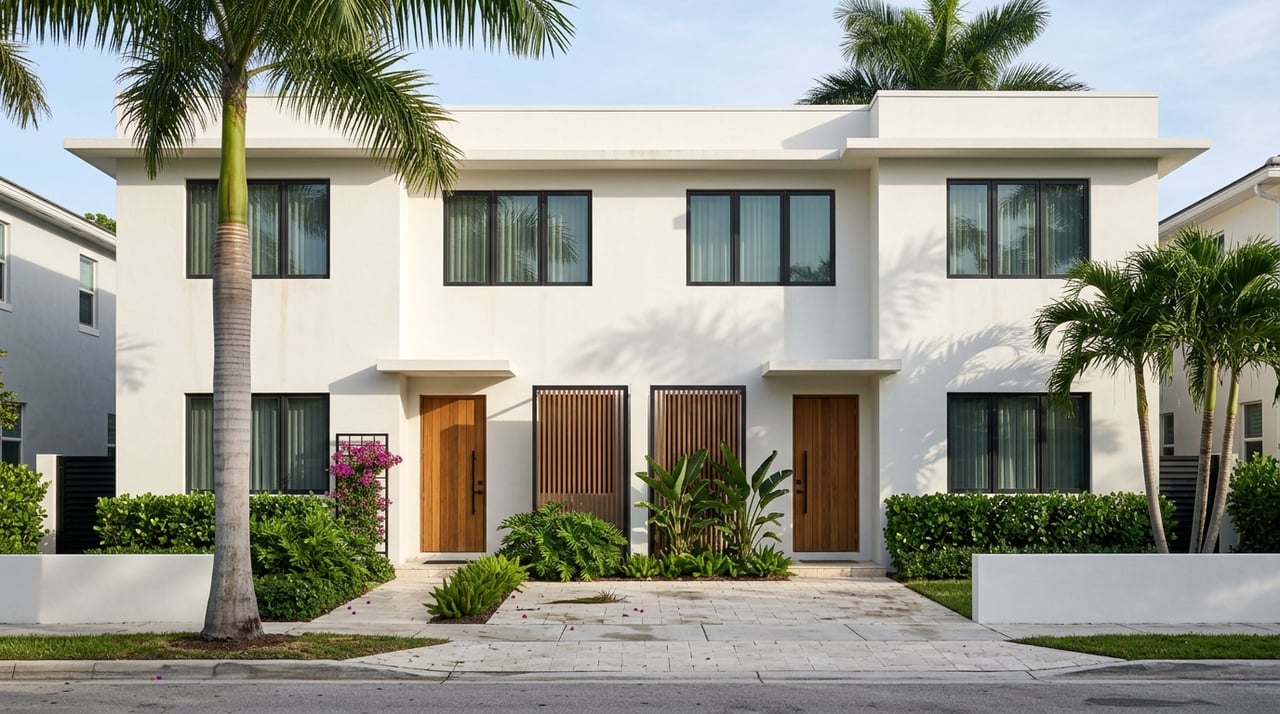
House hacking means you buy a property, live in one unit, and rent the others. Most people start with a duplex, triplex, or fourplex. Because you occupy the property, you can access owner-occupant financing that often requires a lower down payment than pure investment loans. Your goal is simple: reduce your monthly payment, build equity, and create a runway to your next property.
Why Fort Lauderdale now
Fort Lauderdale and broader Broward County are higher-cost South Florida markets. Average apartment rents in the city sit around the high two-thousands per month, which means even one paying tenant can make a real dent in your mortgage. Recent snapshots show typical asking rents around the low to mid thousands for one and two bedrooms, with overall city averages near the $2,700 to $2,800 range. You can review current averages on RentCafe’s Fort Lauderdale rent trends.
Entry prices vary by neighborhood and by property type. City-level indexes often place home values roughly in the mid $400,000s to $500,000s depending on the mix of condos and single-family homes. That price context is exactly why small multifamily can work. With the right loan and rents, you can offset a large share of your monthly payment while owning an appreciating asset.
Properties that qualify
- Duplexes, triplexes, and fourplexes are the most common starting point. You must live in one unit to use most owner-occupant loan programs.
- Single-family homes with a legal accessory dwelling unit may qualify under specific rules. Lenders rely on appraisers to classify unit count and layout. See Fannie Mae’s guidance on ADUs and small-income property valuation in their seller guide resource.
Local rules to confirm
- Zoning and legal unit count: Verify the property’s legal unit status in the municipal and county records. Appraisers will confirm unit count during underwriting.
- Short-term rentals: If you plan to explore vacation rentals, Fort Lauderdale requires registration and compliance with operating rules. Review the City’s Vacation Rental Registration Program before you count short-stay income.
- Flood and coastal risk: Many Broward parcels sit in FEMA flood zones. Lenders typically require flood insurance if the property is in a Special Flood Hazard Area. Check your parcel on the county’s flood zone maps and get quotes early.
- Condo and HOA rules: Many associations limit rentals or require minimum lease terms. Always read association documents before you underwrite income.
How to search smart
Start with the MLS and ask your agent to pull active and closed 2 to 4 unit listings in your target ZIP codes. Use filters and keywords like “multifamily,” “duplex,” “triplex,” “fourplex,” or “income property.” For single-family with rental potential, search for “in-law,” “guest house,” or “detached studio,” then confirm permits and legal use.
When you find a candidate, check the county tax record for legal unit count, look for separate electric and water meters, and ask about roof age, A/C systems, impact windows, and recent insurance claims. Review current leases and payment history if the property is tenant-occupied.
Run the numbers first
A simple, consistent underwriting process will save you headaches later.
Step 1: Pull rent comps
- Use RentCafe for city and neighborhood averages.
- Use Rentometer for ZIP-level snapshots by bedroom count.
- Your lender’s appraiser will prepare a comparable rent schedule for 2 to 4 unit properties. Lenders lean on the appraiser’s income approach. For context on the appraisal methods, review this overview of the income approach for small properties.
Use multiple sources and be conservative when you build your pro forma.
Step 2: Estimate expenses
- Property taxes: Look up the parcel on the Broward County Property Appraiser site and model a new-buyer tax bill. Start here: BCPA FAQs.
- Insurance: In South Florida, windstorm and flood can be material. Ask for homeowners, windstorm, and flood quotes with realistic deductibles.
- Operating costs: Budget for maintenance, reserves, utilities you pay, landscaping, pest control, and professional management if needed. A 30 to 35 percent operating expense ratio on effective gross income is a reasonable first pass, then refine with actual quotes.
Step 3: Apply lender rules
- FHA loans often count projected rental income, but they typically use 75 percent of the lesser of the appraiser’s market rent or the lease amount when you lack a tax history. For triplexes and fourplexes, FHA’s self-sufficiency test requires the property’s adjusted rent to cover its own PITI. See FHA’s rental income approach in Handbook 4000.1 summaries such as this reference.
- Conventional loans under Fannie Mae can also consider rental income for owner-occupied 2 to 4 units. Fannie’s recent updates expanded higher LTV options for these properties, which can make 5 percent down viable for qualified buyers. Review the Fannie Mae policy resource and confirm lender overlays.
Step 4: Quick example
Here is an illustrative duplex pro forma. Replace with your actual rent comps, taxes, and insurance.
- Price: $500,000
- Unit A rent: $2,400 per month
- Unit B rent: $2,400 per month
- Gross scheduled rent: $4,800 per month = $57,600 per year
- Vacancy: 5 percent → Effective gross income ≈ $54,720
- Operating expenses: assume 35 percent of EGI ≈ $19,152
- Net operating income ≈ $35,568
- Cap rate ≈ 7.1 percent (NOI ÷ price)
Debt service depends on your program and rate. Model scenarios for FHA 3.5 percent down versus conventional 5 percent down and include escrowed taxes and insurance. Your lender will finalize the debt-to-income math at pre-approval.
Financing paths to compare
- FHA owner-occupied 1 to 4 units: Minimum down payment is generally 3.5 percent for eligible borrowers. FHA may count subject property rent per the rules above. Always confirm Broward County loan limits with HUD’s FHA mortgage limits lookup.
- Conventional (Fannie/Freddie) 2 to 4 units: Fannie Mae’s recent changes expanded higher LTV options on owner-occupied small multifamily. This can mean 5 percent down for qualified buyers. See the Fannie Mae guidance and ask your lender about reserves and income treatment.
- VA for eligible veterans: VA permits up to 4 units if you will occupy one unit. Many borrowers use zero down subject to entitlement and underwriting. Review the VA’s home loan quick reference.
Alternative options exist for unique scenarios, but start with these mainstream programs to maximize terms and predictability.
Due diligence checklist
Use this list from your first showing through inspection and financing.
- Confirm legal unit count in county records and on the appraisal order.
- Pull current leases, rent ledger, and any security deposit history. Florida rules for deposits and notices are in Chapter 83, Part II.
- Verify HOA or condo rental policies and minimum lease terms if applicable.
- If short-term rentals are part of your plan, confirm eligibility and requirements with the City’s Vacation Rental Program.
- Check flood zone and base flood elevation on Broward’s flood maps. Get flood quotes early.
- Ask your lender about appraisal requirements for small-income properties and rental schedules. See an overview of the income approach.
- Review the parcel on the Property Appraiser site for the current tax bill and discuss projected changes as a new owner. Start at BCPA FAQs.
Simple timeline to closing
- Week 1: Get pre-approved with a lender that regularly underwrites 2 to 4 unit loans. Share your target rents and expense estimates.
- Weeks 1 to 3: Tour properties, confirm legal unit count, and build a conservative pro forma on top candidates.
- Weeks 3 to 5: Go under contract. Order inspections and the appraisal. Request insurance quotes, including wind and flood.
- Weeks 5 to 7: Finalize loan approval, clear conditions, and coordinate any HOA or city paperwork.
- Closing week: Complete your walkthrough, sign closing documents, and set up utilities, leases, and rent collection.
Mistakes to avoid
- Counting short-term rental income without confirming registration or HOA rules.
- Underestimating insurance and property tax adjustments after purchase.
- Assuming the lender will count 100 percent of projected rent. Many programs use a haircut or an appraiser’s schedule.
- Ignoring flood zone status. A required flood policy can change your cash flow.
- Skipping a rent comp cross-check. Use multiple sources and stay conservative.
Ready to explore your options?
If you are serious about a house hack in Fort Lauderdale, partner with a team that lives in the numbers and knows the local rules. We help you source the right 2 to 4 unit opportunities, underwrite conservatively, and navigate financing, inspections, and insurance so you buy with confidence. Connect with Dija Phaire and Eliot Rodriguez to map your plan.
FAQs
What is house hacking in Fort Lauderdale?
- It is buying a duplex, triplex, or fourplex, living in one unit, and renting the others to offset your mortgage using owner-occupant financing.
How much rent should I underwrite?
- Cross-check market rent using RentCafe and Rentometer, then lean conservative and confirm with the appraiser’s rental schedule.
Can I use Airbnb or short-term rentals?
- Only if permitted by the City and any HOA; Fort Lauderdale requires registration and compliance under its Vacation Rental Program.
How much down payment do I need for a duplex?
- FHA often allows 3.5 percent down for qualifying borrowers, Fannie Mae may allow 5 percent down on owner-occupied 2 to 4 units, and VA can be zero down for eligible veterans.
Will my lender count rental income from day one?
- Many programs do, but often with limits; FHA typically uses 75 percent of the lesser of market rent or lease amount when there is no prior tax history.
Why are triplex and fourplex FHA deals tougher?
- FHA applies a self-sufficiency test on 3 to 4 units, which requires adjusted rents to cover the property’s PITI.
How does flood insurance impact my deal?
- If the property lies in a FEMA Special Flood Hazard Area, the lender will likely require flood insurance, so check Broward’s flood maps and get quotes early.
Do I need a special license for long-term rentals?
- Long-term rentals typically follow Florida’s landlord-tenant rules; review Florida Chapter 83, Part II and confirm any city or HOA requirements.